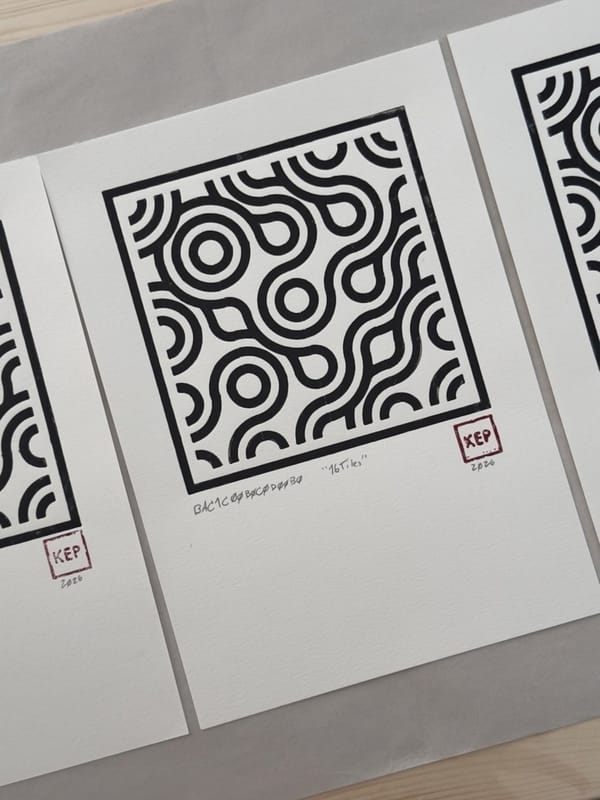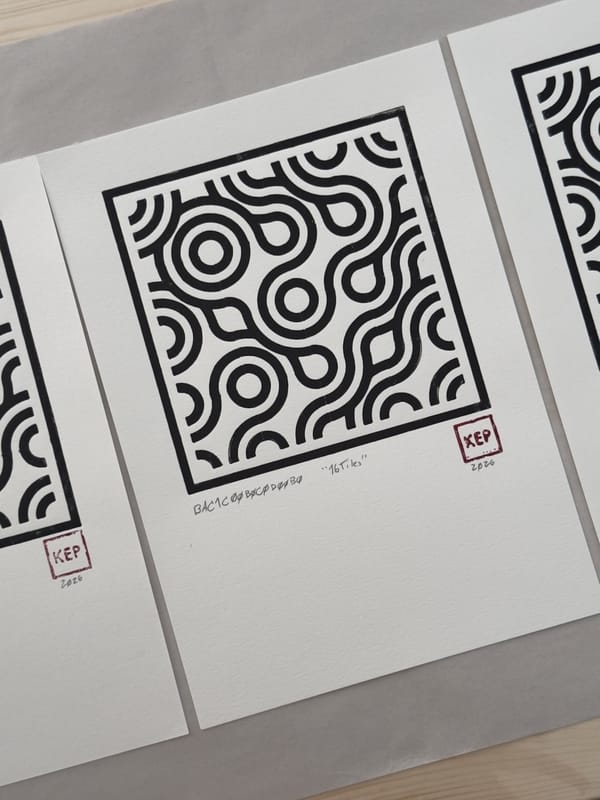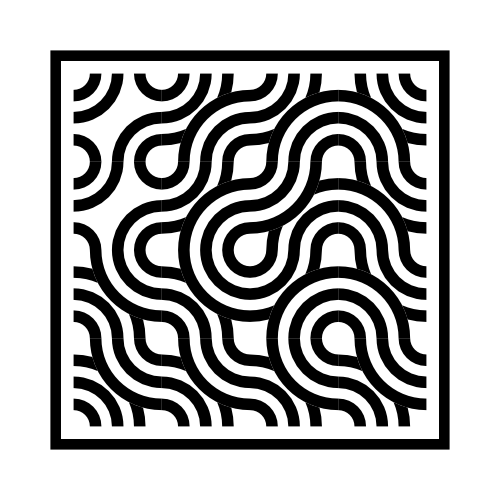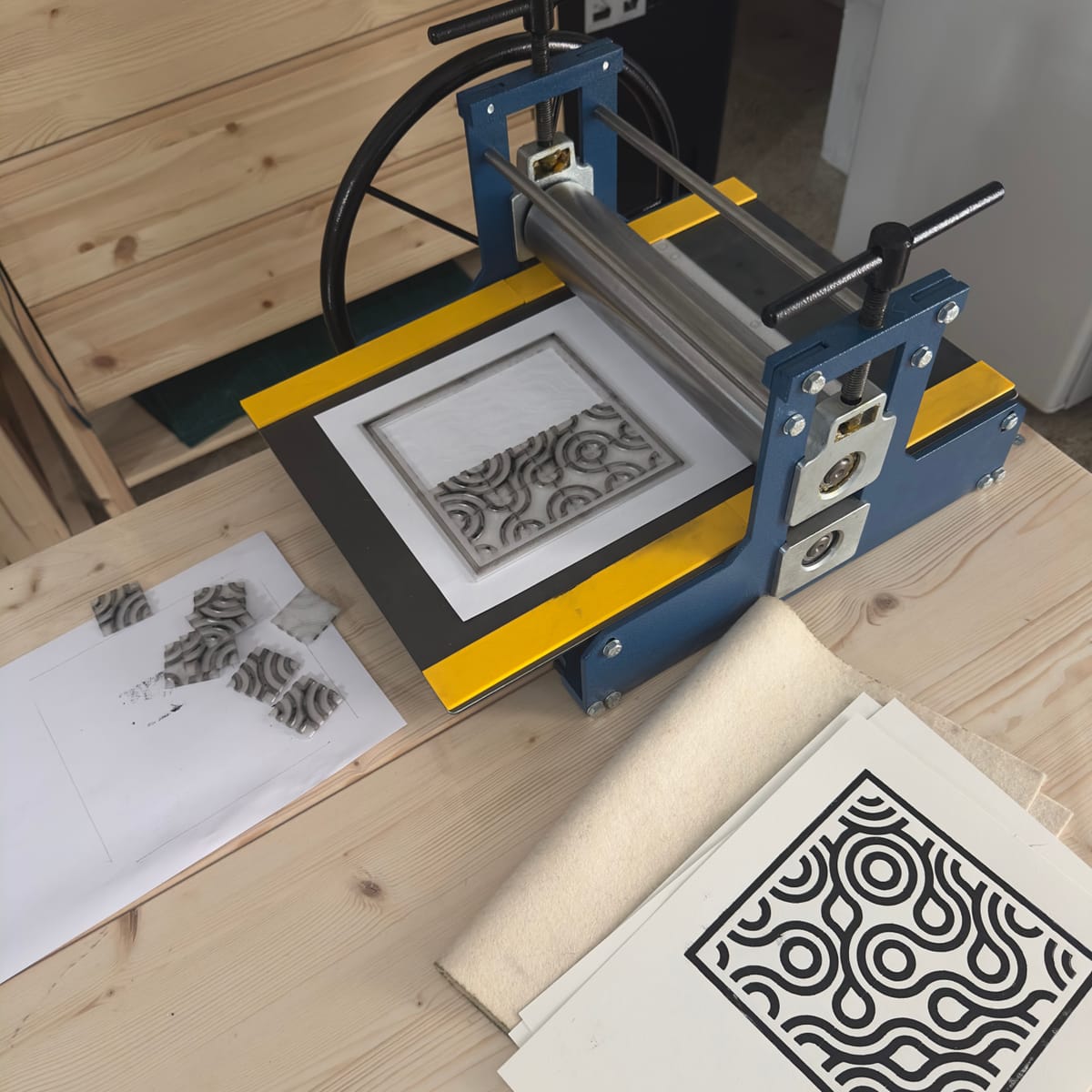
This body of work started with a computer design of two tiles intended to tessellate, an iteration on the well-known Truchet tiles, with the idea of arranging them into a 4x4 grid to create a larger patterns. The two tile designs I created can combine into 2.821.109.907.456 distinct 4x4 configurations. That’s a lot.
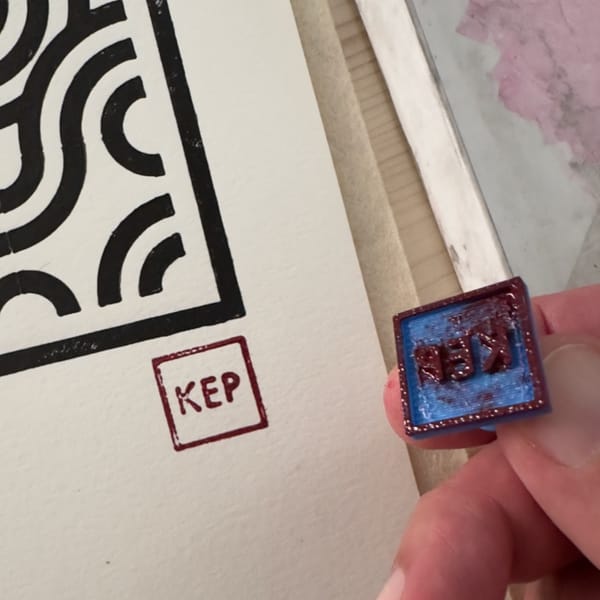
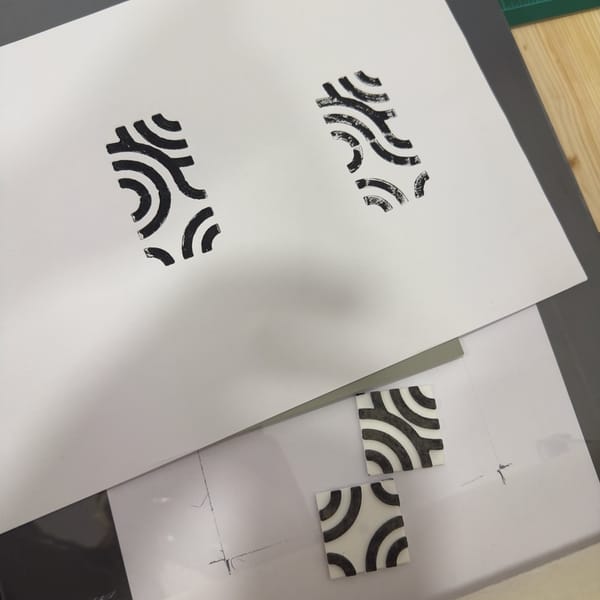
With the assistance of Jarred White of Shaolin Foundry, we transformed these digital tile designs into real objects, suitable for use on an etching press. We were unsure if 3d-printed matrices were suitable for traditional printing processes, but we were soon surprised at how well the results turned out.
But rather than printing an edition consisting of one select design, I thought: Why not take a chance to play with ideas of scarcity, and do a variable edition of ~2,8 trillion, in which each print is unique, never to be printed again?
The tiles, being 3D-printed, provide a distinct look from hand-carved matrices like woodblocks or linoleum. On one hand, the use of computer design technology ensures that each tile is geometrically perfect. On the other, the imperfections inherent in 3D-printing technology show as texture and flawed impressions in the final print, as the plastic surface has a distinct texture and does not take ink evenly. The process is thus clearly visible in and part of the resulting work.
Each print is made from matrices conceptualized in Affinity, and realized in PETG on a Bambu Labs P2S 3D printer, stamped and assigned a serial number that uniquely identifies the specific tile configuration used to make it. They are printed on Winsor & Newton 220g/m² A4 paper with Charbonnel oil-based relief printing inks. You can purchase your own unique print at the the KEP Shop (or drop by the workshop in person!).