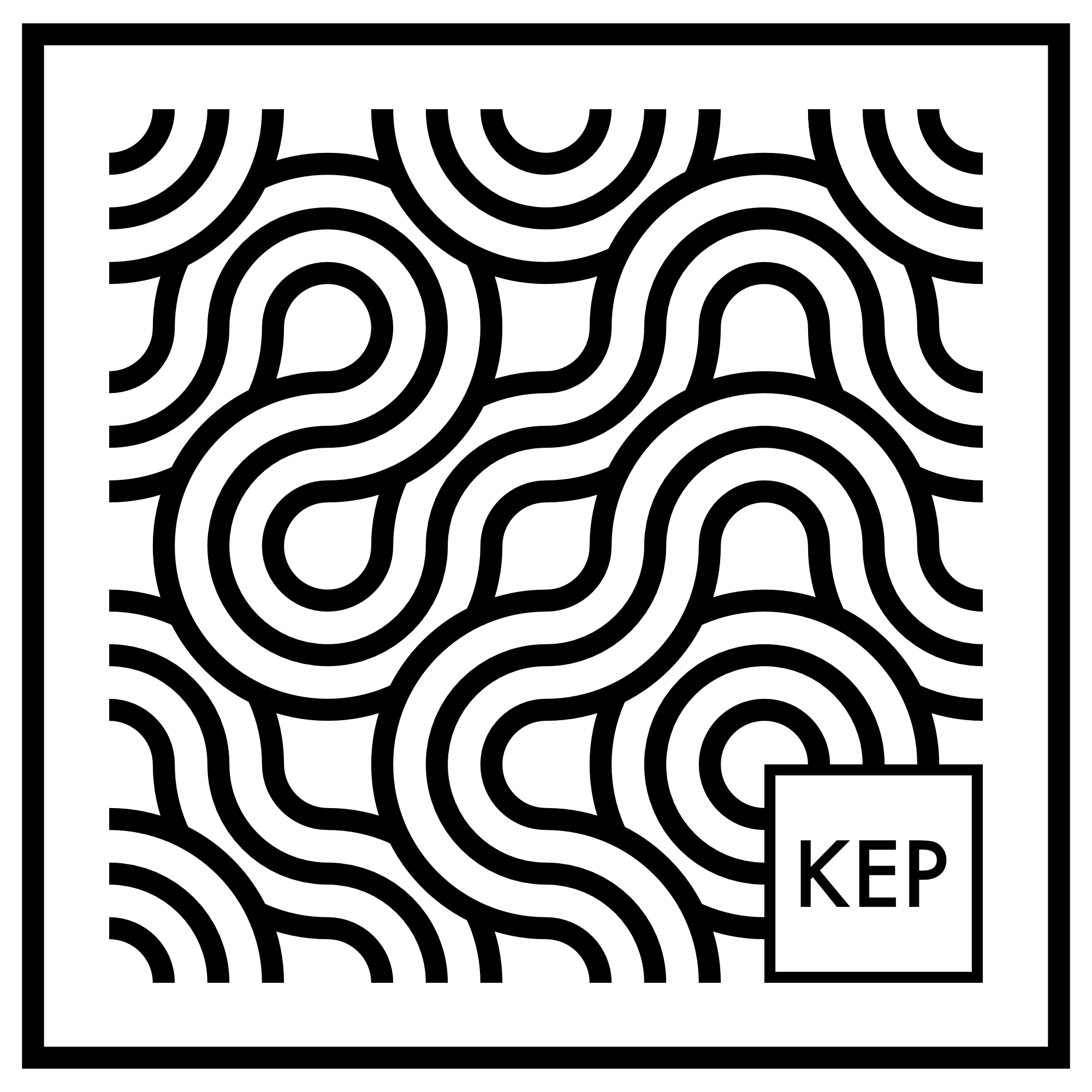
Preview
Truchet Tilings
Using 3D printing techniques to make Truchet tilings.
I’ve never really noticed that I have an obsession with tilings. Weird observation, I guess. But it’s true. I love tile-placing games like Carcassone. I designed the tile backsplash when I renovated my kitchen. I’m fascinated by the Portuguese tiles called azulejos. Etc., etc., etc.
Before I head down the rabbithole of photogravure, I wanted to start with a relatively simple project to get my feet wet with printmaking. And I wanted to do something fun with my friend Jarred at Shaolin Foundry, who is into 3D printing. We thought: Wouldn’t it be cool to 3D print a set of tiles I could print from?
To keep things simple, I decided I wanted to step into the world of Truchet tilings. A Truchet tile is simple in concept: Take a square, draw two curves connecting the midpoints of its sides. Then, rotate it, combine it with its neighbours, and suddenly the simple geometry produces something that looks almost organic, flowing and knotted in ways that feel like they shouldn’t be possible from such a constrained set of moves. The mathematician Sébastien Truchet described the idea in 1704, and people have been doing fun things with it ever since.
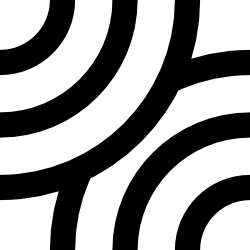
The thought is to take this basic design, and 3D print it out as a set of tiles I can arrange in my press’s printbed, much how a typesetter once arranged individual letters. Except instead of spelling words we’re building patterns, with each arrangement producing a unique print.
It’s early days. We don’t even have our studio set up yet. But the direction is clear, and I’m excited enough about it that I wanted to share it before I’d worked out all the details. Stick around.