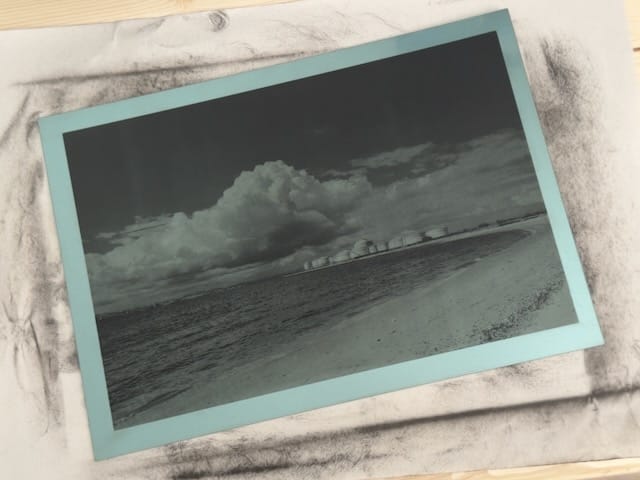
The difference between a photogravure print and a giclée print might not be apparent, at least not at first glance. But I promise you, these are very different things. A giclée print is a reproduction of a digital file, and can be printed a thousand times with perfect consistency. A photogravure print is made from a physical plate, inked and pressed by hand, one impression at a time, each a little different, those differences physical proof of the human labor that went into making them.
Photogravure is the original photographic reproduction process, with a two-hundred year history. Because it relies on an etching press to force ink into damp paper at extremely high pressure, the resulting print has an extremely tactile feel that is unique among photographic printing techniques.
Because the print is made from a physical plate, photogravure opens the door to interesting creative processes, including things like duotone printing, overprinting, monochome printing in colors other than black, adding spot colors, false colors, even hand-painting worked into the same piece.
The paper isn’t limited to smooth, machine-fed paper either. An etching press can transfer ink onto heavily textured paper, translucently thin gampi paper, or deckle-edged sheets that are simply unprintable with the giclée process.
Sizes A6–A3, in editions of 10 or more.
This service is not yet available. Enquiries are welcome.